Showing posts with label birding. Show all posts

Thursday, 14 November 2024

The cheetah gets a consolation prize.

The Kgalagadi, surprisingly enough actually hosts a fair number of animals. Its neighbor the Namib even has elephants, but here its springbok and Gemsbok or Oryx as they are known with a smattering of Wildebeest and steenbok. The latter being in a small number. So when we see this cheetah walking along the Nossob river bed evidently looking for something from her attitude we followed. She came over the crest of a small dune and froze as her head cleared the top. Springbok!! Yes they were about 800 m away and there was absolutely no cover between her and them but she had found them. She crouched down and took about 5 minutes to cover 3 meters and lay down in the shadow of a bush, making her body flat as possible and still keep an eye on the springbok feeding blissfully unaware down the riverbed.
We settled in for a long wait. Patience is the hunters virtue, just sit and watch for hours if need be and strike in a flash when the time comes. Well the flash came long before we expected it. An oryx came strolling along and he had not seen the cheetah either, suddenly he found himself 10 meters from the cat and with a startled leap he watched her as he walked away. An oryx outweighs a cheetah 5 or 6 times and has nothing to fear from that cat.
The upshot though was that she moved her position slightly and now was able to see around the bush to the left, while before the bush obstructed her vision. Time dragged on, and frankly I was getting ready to call it off and move. In less time than it takes to read it, her head came up, she stood up and in less than a second she was running full tilt for my window. The camera could take 3 shots before she covered the 80 meters to the car went around and killed a juvenile ostrich under my window.
We had not even seen the ostrich come across the plain to our left, unaware of the cheetah. Her elevated position gave her the advantage and she pressed it all the way. Dragging the bird she headed for the shade of a camelthorn and proceeded to eat. A jackal trolling along noticed and sat down out of immediate danger for his long wait for a meal. Life and death in the Kgalagadi is just one wrong move.

Tuesday, 12 November 2024

Cheetah mom and cubs bonding.

Early one morning we were driving along and up ahead on the right were a few animals moving towards the road out of the bush. A little further we recognized them as a family of cheetah. They were doing something that I could not really understand at first. Mom was licking the face of the youngster. Was this to remove blood off his face from the kill they just ate or was this just a bonding activity licking each others faces. I truly don’t know. But it certainly went on for a while and I think she was cleaning his face and afterwards he cleaned hers as well. Flies are terrible sometimes out in the bush and with a face covered in blood it’s a fly magnet. Nobody really wants that to happen to them and so I think she cat-like was just cleaning up the kids before they headed off.

Saturday, 2 November 2024

The african rock python and its prey!

We had an amazing experience one day in Kruger. We were heading to the dam to do some birding and its kinda out of the way a little. So we were a little surprised to see a few cars parked by the road about 800m before the lake. Wondering what was happening when we could not see much of anything we looked around a bit and lo and behold there was drama unfolding.
A giant African rock python had caught an impala and was constricting it in the tall grass. WOW! An impala is a mid size antelope and weighs about 40kg so it would need to be a fairly big snake that could overpower that impala. Now constrictors are themselves vulnerable when they are constricting their prey especially out in the open like this and they don’t move very fast either so a group of hyena or a few lions could make short work of a large python. I have seen a video where a honey badger killed a 15 foot python. So the snake was very aware of his/her surroundings and came up once in a while to suss out the surroundings for threats to itself.
We watched for a while and when it all seemed to be quiet we left. We returned a couple of hours later just in time to find the snake dragging the impala into the bushes so he/she could swallow it in peace. You can imagine the strength it would take a snake, an animal with no limbs for traction to drag a 40kg animal through the tall grass. They are really powerful. A python is pretty much all muscle. They would eat a meal like this and digest it for about a month or so in a thicket and this is actually when they are really vulnerable cuz they cannot move at all virtually and have no ability to constrict anything in defense. So they find a deep dark place to hide and stay there till they are all set for the next round. COME ON SAFARI WITh US AND HAVE YOUR OWN AMAZING STORIES TO TELL - www.dreadlionsafaris.com

Friday, 1 November 2024

The best network in Africa!

The best network in Africa is owned by…….? Not who you would think. It is the vultures who have the best communication system and its all in the air. Vultures have the best network in Africa. There was a notable case where a vulture tagged in the morning at Pilanesberg National Park was found late afternoon on a carcass in the Kruger park. A distance of 500km and more. How did he show up? Let me tell you these guys are exploring Africa by air.
How the network works is simple. Each vulture keeps track of the ground underneath for feeding opportunities and also keeps track of his buddies up to 5 km around him. So each individual has a radius of about 10 km around him or her. Its like a tic-tac-toe grid that each vulture is in the middle of. So his neighbours keep track of him and he does that same for them. So when one drops down to look at something better, soon the neighbours realize that he has moved and as one moves downwards the neighbours start and …. You guessed it, their neighbours and so on and on and on. So when 1 vulture drops down fast it is seen by all the vultures through the relay system and in no time the word is out. Nothing is seen yet on site, till out of a clear sky you have 100s of vultures in a matter of a few hours perched around near a carcass waiting for the lions to finish so they can dig in. Its incredible how this happens in such a short time when you cant even see 1 vulture at the outset.
On a rare occasion a vulture will spot a carcass in a tree left unattended by the leopard who put it there and sure enough they will latch on to it and eat it right there. In ancient times hunting tribes would look for circling vultures and head to the area in the hopes of getting a portion of a meal.
The vulture also has special eyes that can see very far and also very clearly. They can reportedly spot a mouse from thousands of feet in the air. Their eyes have two foveas with special nerves in the cornea that enable them to do this despite sunlight being so strong up in the air. So these guys are built for long distance and close up zoom. The amazing thing for me is how each vulture eats a different part of the carcass so all get their share. Some eat the flesh, some eat the organs, some eat the sinew especially, and of course the Lammergeier, or Bearded Vulture is the champ, he eats the bone and marrow. They take the bones up into the air sometimes hundreds of feet and then drop it on rocks below. The smashed bone is now in jagged shapes that they can actually swallow whole and digest completely. It looks like it could tear the skin in the throat open but they are immune to that happening. Pretty amazing how it comes together perfectly in Nature. COME ON SAFARI WITh US AND HAVE YOUR OWN AMAZING STORIES TO TELL - www.dreadlionsafaris.com

Thursday, 31 October 2024

THE LITTLE KNOWN FACTS ABOUT HYENAS!

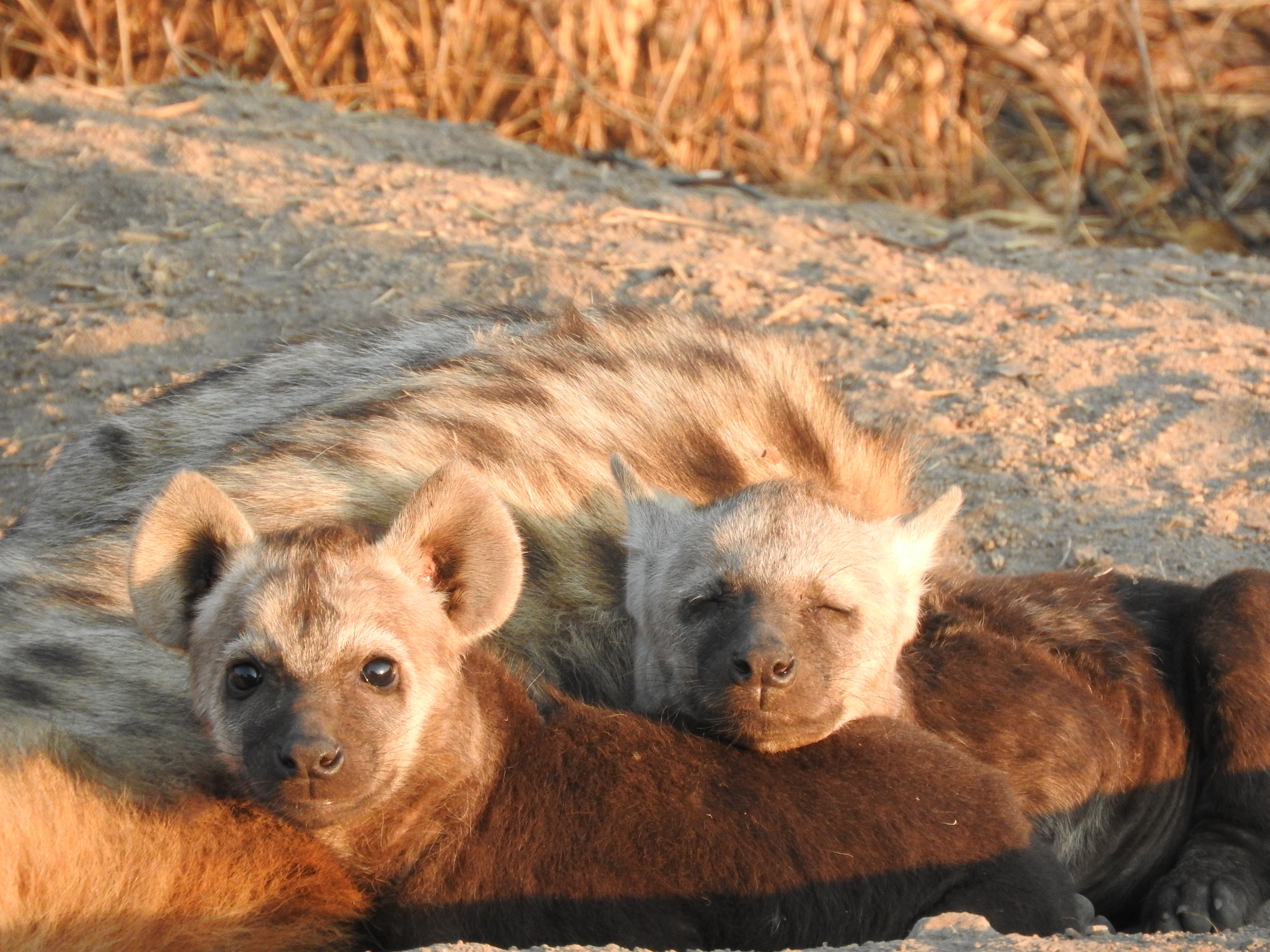
Hyena cubs are a common sight in the Kruger. The hyena clans den in the Culverts and storm drains which are a convenient location for the cubs to grown up out of sight and looked after by mom. The interesting thing about the cubs is that they actually change colour as they grow older. The cubs are born totally black and are of course totally dependent on mother’s milk for the first few months.
The mother will keep them hidden in a den for a few weeks as they grow older and stronger. The other interesting thing is that usually 2 or 3 cubs are born and only 1 is a female. If there are 2 females the stronger one will overcome and even kill the other. The reason is that in hyena clans the hierarchy is very strictly overseen. It is also a matriarchal society. What that means is that there is an alpha female who is the only one who mates most of the time, the other females would mate depending on the alpha female’s discretion. The new born female is already instinctively aware that she is the princess and 2 is too many. So the hierarchy goes lke this, Alpha female, new born female, all other females in a line all the way to the end and then Alpha male. So if you think you are an alpha male then you best not join a hyena clan or all the ladies outrank you.
Anyway the cubs are born totally black and then they slowly start fading into the adult colour. They fade from the face backwards so you can often see half and half cubs which are so cute to look at. The black colour is to protect them in their den, so no predators get a look at them and they can be camouflaged in the den in the darkness. Jackals honey badgers lions leopards martial eagles are all in the running when it comes to who preys on these cubs and the hyena clan is very wary for this reason. COME ON SAFARI WITh US AND HAVE YOUR OWN AMAZING STORIES TO TELL - www.dreadlionsafaris.com

Monday, 14 October 2024

The three stooges of the Kgalagadi.

In all my times in the Kgalagadi, there are 3 players that always stand out and always get my attention. The pale chanting goshawk, the ubiquitous jackal and the star of the show, the honey badger. I have taken to calling them the 3 stooges of the Kgalagadi.
These inseparables, or so it seems, are always up to something. Of course it is the honey badger doing the heavy lifting just poking his nose into everything looking for food and the other two just hang around waiting for leftovers. As the world is, some people willing to work and others willing to let them work. LOL. Anyway i hope you like the photos.

Friday, 11 October 2024

Waterhole wary!

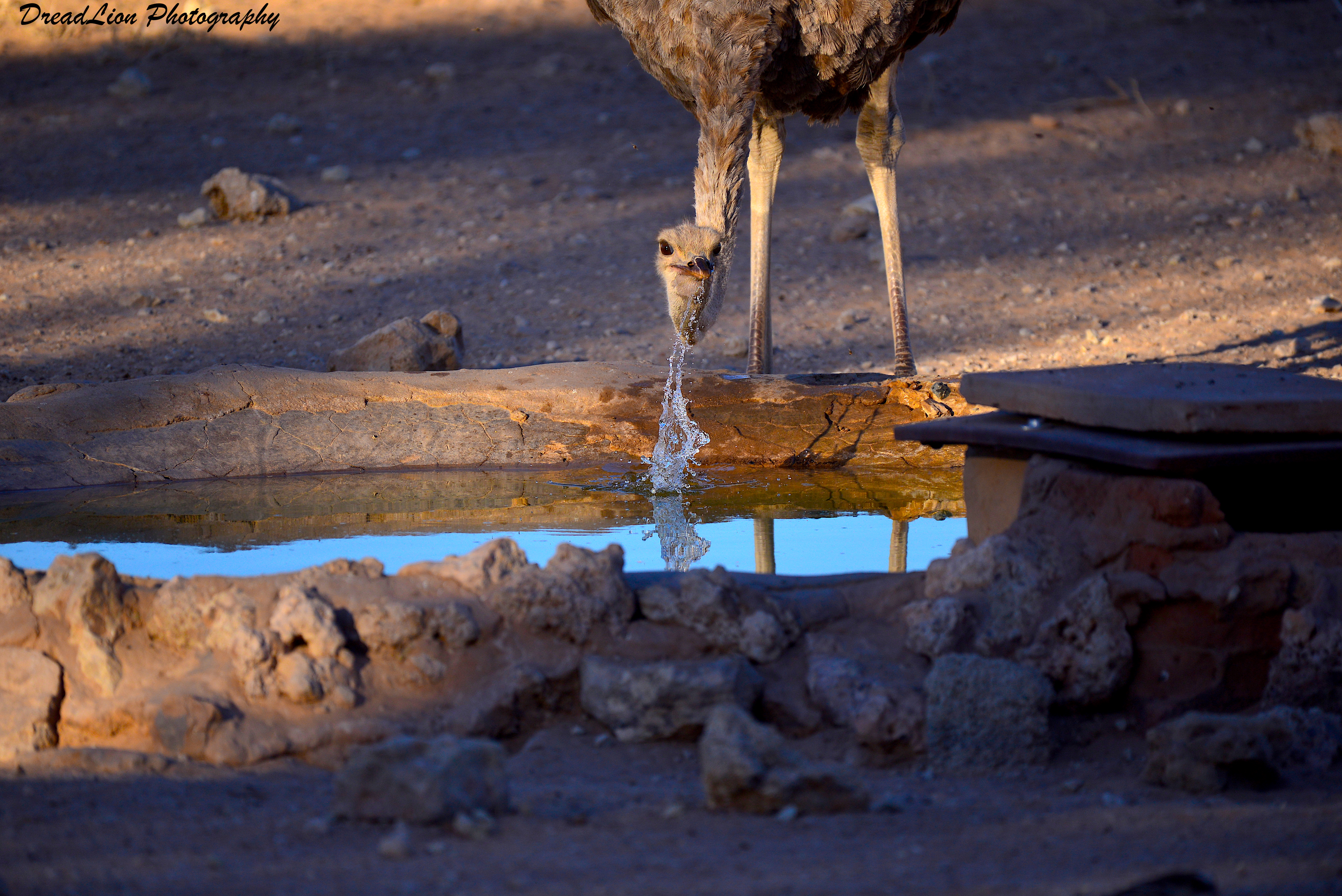
We were driving along one afternoon in the Kgalagadi and came up on an ostrich right there onthe road. It was pretty obvious what she wanted to do and he attitude and posture shows it clearly.
The other animals had cleared off and now there was space for an ostrich to drink at the waterhole. Kgalgadi waterholes are pretty dangerous, especially in the summer time. Lions lie in ambush in the nearby bushes and are pretty successful there. I always thought thats cheating, i mean come on, everyone needs water, so leave it alone. But its a jungle out there, whaddaya know, and its all like "I am in for me and the Devil take the hind most." So its good she just bided her time and got a nice drink. She was eyeballing me all the while though.
COME ON SAFARI WITh US AND HAVE YOUR OWN AMAZING STORIES TO TELL - www.dreadlionsafaris.com

Sunday, 15 September 2024

Thieving hyenas!

Cheetahs are delicately built creatures and have literally no defence sytem at all except to run away. Especially when faced by animals like leopards lions or hyenas who could do them serious harm or death retreat is the first and only option. This puts a lot of stress on cheetah moms who have to hunt daily to feed their brood. A cheetah kill is often a spectacular sight. A high speed adrenaline charged chase across the savannah that can attract a lot of attention from far away even. So when this mom and her 2 surviving cubs were eating a group of 3 hyenas barreled right in and took over the carcass. It was my first time to see this takeover attempt and I was amazed at how fearlessly the hyenas just barged in with no regard for anything and just took over the kill. The poor cheetahs had no option what so ever to resist.
There is a reason they cant resist and that’s because even a scratch or a bite from a hyena can take their performance down by 10% or 15% for a few days. The margin between predator and prey especially for cheetah is very narrow, its prey has a 100meter head start and runs very fast as well. So if the cheetah is not performing at optimum then its likely she will miss much more and that could be life or starvation for cheetah mom and her cubs. She just walked away and gamely started scouting for her next hunt. The hyenas were the victors on the battlefield once again.
COME ON SAFARI WITh US AND HAVE YOUR OWN AMAZING STORIES TO TELL - www.dreadlionsafaris.com

Friday, 13 September 2024

THE HUGE MALE LION AT ROOIKOP.

This is a story about the lions of the Kgalagadi. Specifically the huge male I saw at Rooikop. I left Nossob camp a little late cuz we were moving camp and I was a little put off about missing the ‘early’ morning, it was already about 730am and I had lost an hour. But when the Kgalagadi delivers, it happens in spades. So we are driving along and suddenly I hear a low grunt/roar. And there on the left, high up on the crest of the dunes is movement. So I stop, we all watch and bingo it’s a male lion, walking parallel to the car and in the opposite direction. I reverse for a bit and then flipped the car around to drive along the same path when he cut across and came straight down the slope towards the Rooikop waterhole.
The sun caught his beard as he came through the bushes and it was then that we saw him in all his glory. 4 meters in front of the car he walked majestically unhurriedly across the road. What a lion! Certainly the biggest most magnificent Swart Manhaar of all time. Well at least for me. Swart manhaar is the Afrikaans word for black-maned lion, that’s what they have in the Kgalagadi. He was heading for a drink. I positioned opposite him and took some pictures and watched him. He came around and sniffed the ground for news of his family and as I moved the camera it caught his eye. He gave me a look that was simply heartstopping, especially as this massive lion was just 5 meters from the car. He held my eyes for an eternal minute, and then went back to sniffing.
My breath came out in a burst, I had not realised that I had stopped breathing. I pulled out the phone to make a video as he walked away roaring as he went, calling to let everyone know he was here and a message to his family letting them know where he was. The whole group in the car looked at each other, we all felt the same way. It had been an incredible experience. Kgalagadi can be tough, but as I said when it delivers it leaves you speechless.
COME ON SAFARI WITh US AND HAVE YOUR OWN AMAZING STORIES TO TELL - www.dreadlionsafaris.com

NOW YOU SEE ME......

In the bush you have to be in tune with your surroundings and sensitive to the animals you see and what they are feeling. Its not always simple to do and often you don’t get a amazing reward for it but when it clicks its very special. I was driving along the southern river road and we had stopped to watch a herd of elephants walk by. Lovely to see those majestic animals walk across the bushveld. Just as I was moving along I noticed 2 female kudu looking at a clump of logs and bushes rather anxiously. Seemed like there was nothing there at all but the 2 kudu females were convinced there was something there. So I stopped and looked from where they were, nothing. Moved forward a bit, nothing. Moved directly in front of the log covered with bushes and switched off the car. Got the binoculars out and stared into the clump of vegetation. All at once I saw movement. There was something there!!! But what?? Was it worth spending time here for what could be a sleepy warthog? Anyway, the kudu were still anxious so I kept at it.
Soon enough a little head peeped up through at me and I go the jolt of my life. It was a baby leopard. ‘Leopard’ I shouted to my guests in a stage whisper and every one glued their eyes to the bushes hoping for a new glance. Now I was a little concerned. If this little bloke was here alone and we attract attention then jackals, hyenas, honey badgers and worst of all lions may find him and that would be the end. No trees in the vicinity less than 30 meters away. It would be curtains for the poor bloke. Then some one said ‘That’s not a cub’ followed by someone else ‘Seems like there are two’. All this while I have been taking pictures and hoping to catch the movement into something tangible. So I went back over the photos, one by one. Sure enough. Mom and the little one were together. It would have still been hard to take the little one to safety from where she was so another couple minutes and we were off. What a cool sighting. Nobody in sight to tell either. The kudu were right to be nervous, but they outweigh a leopard almost 3 times so no real danger there. COME ON SAFARI WITh US AND HAVE YOUR OWN AMAZING STORIES TO TELL - www.dreadlionsafaris.com

THE NSEMANI LIONS.

Deep in the heart of Kruger is a beautiful waterhole called the Nsemani dam. The dam abuts the road and while parked there one can have a panoramic view of the dam and the surrounds and naturally such a large dam attracts wildlife of all sizes, so it’s a game viewing paradise. I had heard that the Nsemani pride that lives around the Nsemani dam had small cubs, and quite a few so that day on safari, I decided to go look for them. Apparently they drink late just after sunset and I was hoping to find the pride lazing about near the waterhole. They were not there. We cant really hang around there too much at that time cuz the camp gates will close and so I left, a little disappointed.
So bright and early the next morning, you guessed it, we went back. Again nothing happening on the road or in the bush on the far side. So we went around the corner to the viewpoint above the river bed and were treated to a wonderful sight. 4 lionesses were sitting in the early morning sun and a couple of cubs lazed close by. As we watched them just lying there a movement caught my eye and sure enough here were more in the back behind the termite mound that lay next to one of the lionesses. Then there was more movement and a few more stood up and stretched. Just getting the kinks out their joints as it were. There are a couple yoga poses that are named after these movements believe it or not.
Lions stretching usually means they are going to move so I moved the car in to a position where they would likely go if they were heading for the shade and sure enough. 23 lions walked by. Just sat there and watched the royal family go past at about 10 to 25 meters. Slowly and casually as if they owned the place which they actually do. Ha! Little ones scurrying along with anxious glances around, bigger ones scoping the area for a potential target, and finally the king just making sure everyone is all ok. It was such a treat, what a way to start the day. What an amazing 30 minutes.
COME ON SAFARI WITh US AND HAVE YOUR OWN AMAZING STORIES TO TELL - www.dreadlionsafaris.com

Monday, 9 September 2024

The portable airconditioner of the bush.

Rhinos are huge. You look at them and really wonder at them cuz they look like they are from a different time. Almost dinosaur in size and shape and the black rhinos have a mean disposition. Those have been hunted to near extinction all for the horn. These are white rhinos, so called by the early settlers who were of Dutch extraction and referred to them as 'weit' meaning wide mouth rhinos. The English came along and figured it was 'white' and we are now stuck with that nomeclature. White rhinos are more placid and considerably bigger than black rhinos. They live in the grasslands and their mouth is perfect for eating grass.
These two mother and calf, have obviously been cooling off in a mud wallow. The idea being you sit in the mud and roll around in it cake yourself all over with the wet cool slimy mud. Then as it dries off it cools you down. Like a portable airconditioner. Then the side benefit is when it is all dried up you scrape it off on a convenient tree or a rock and all those pesky ticks and bloodsucking parasites that are on your skin are sloughed off by the mud being scraped off. Exfoliation in the bush. Most Large mammals do this, in fact even warthogs who are not really that big use the same technique.
This cute little guy has been busy at it as well. Literally coated like icing on a cake. Too cute. COME ON SAFARI WITh US AND HAVE YOUR OWN AMAZING STORIES TO TELL - www.dreadlionsafaris.com

Friday, 30 August 2024

DOVES AT THE WATERHOLE - KGALAGADI

When the suns rays are at a low angle and the heat of the day is dissipating into the cool of the night, animals and birds IN THE KGALGADI come for a drink. The waterholes are busy and the unwary are in trouble. We sat by a waterhole before sundown and waited. Nothing. Well the waiting game is played best by playing it. So we stuck around, and before long we were greeted by wave upon wave of doves. They were so numerous it seemed like 100s came and went over the period of an hour or so. Lanner falcons and red necked falcons and even jackals bide their time at these waterholes trying to snag a plump dove for dinner but no such luck this time. It was how ever surreal to capture an ever-changing collage or you could call it a live mosaic of these beautiful birds as they came in to drink stayed a while and left. The setting sun gave us a hint to head home and we did albeit sadly to leave such a beautiful sight.
COME ON SAFARI WITh US AND HAVE YOUR OWN AMAZING STORIES TO TELL - www.dreadlionsafaris.com

The dessert that I love. KGALAGADI

OK OK.... its not dessert..... its desert, and I love it. The Kgalagadi and its red sand dunes have a way of sneaking into your soul. Let me give you an example. 

It was the dead hours in the Kgalagadi, sun shining high in the sky, animals looking for cover from the blistering heat, and we  were driving along among the dunes. Frankly I had had it,  cuz nothiong moves at that time in that heat. A movement barely visible in the red sand on the left caught my eye and i slowed down. There is something there i said and my guests looked and said seems like a cat but bigger and has long ears.

 CARACAL! I could not believe it. My first sighting of this usually nocturnal cat. I parked by the side of the road and we all just watched this handsome cat walking through the clumps of grass and the bushes across the dunes. 


The red colouring of the fur blending so well with the sand and the background of the dunes, its not really easy to spot as you drive along. Its a medium size cat, about the size of a Dalmatian dog with rough red fur and long tufts on their ears. The ears are the ones that really stick out, tufted ears that are long and black at the back. Makes them look quite striking. They are primarily bird hunters and will take small or young antelope occasionally. But such a handsome creature we were all mesmerised by him. 


COME ON SAFARI WITh US AND HAVE YOUR OWN AMAZING STORIES TO TELL - www.dreadlionsafaris.com